SONIC PICO PARK is a cooperative action-puzzle game for 2 to 8 players, and learning how to play SONIC PICO PARK is quicker than it looks: every stage asks for the same three things — the stage key, the goal plate on the right, and the whole party arriving there together.
How to play SONIC PICO PARK: the goal of every stage
The rule is identical in every stage, from the first world to the last: take the key, open the way it unlocks, and get every player onto the goal plate on the right side of the stage. The goal plate is the classic Sonic spinning sign on a post.
One player standing on the plate accomplishes nothing. The camera will not scroll forward until every player has moved on, and the stage only clears when the last teammate is standing on it. Several stages also need a set number of players holding switches at the same time before the route opens.
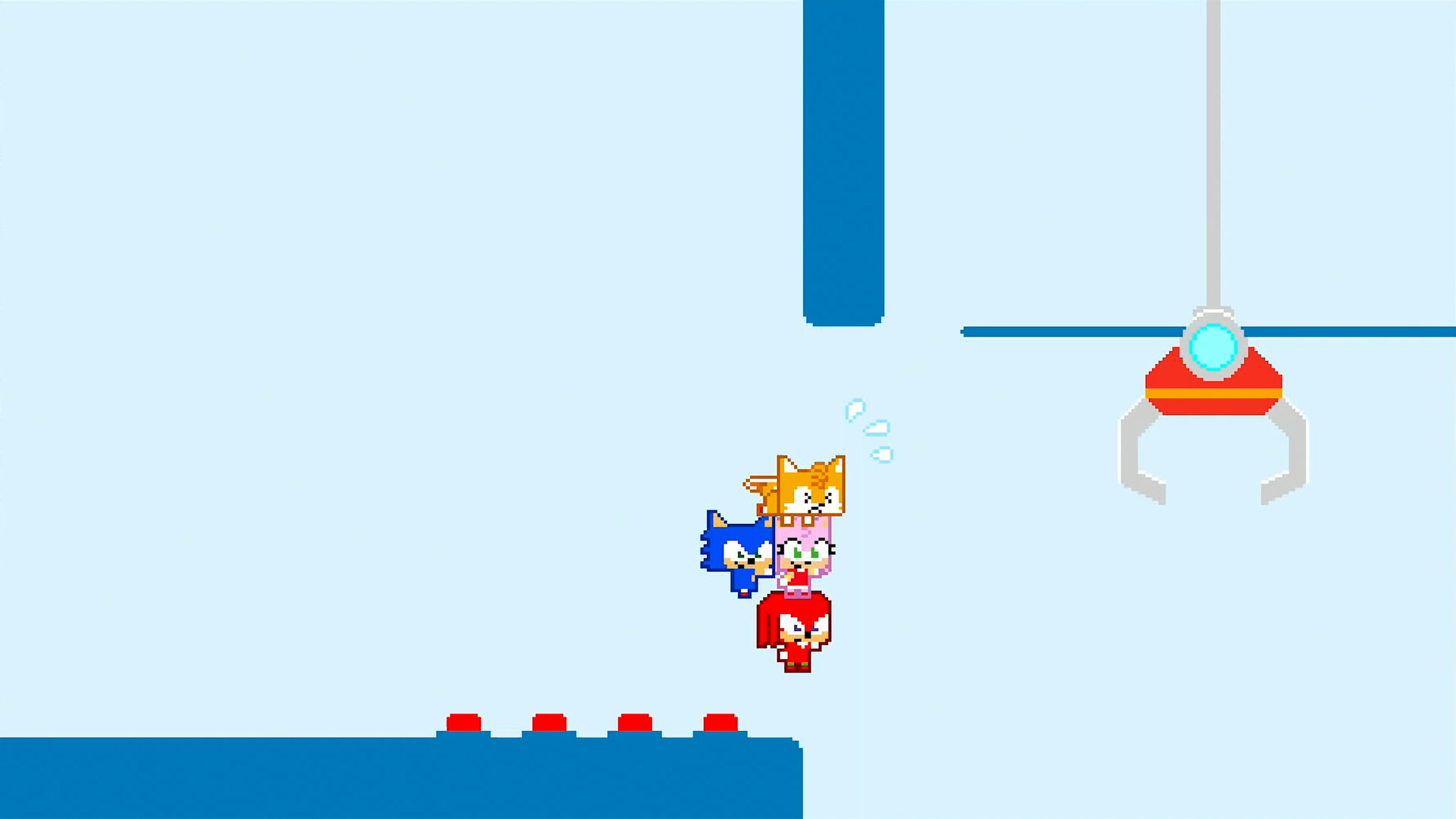
What your party has to do
Between the key and the goal, each stage adds one mechanic, and the mechanic usually involves your teammates rather than the character you are holding:
- Players stack on top of each other to build a ladder up to a ledge.
- One player stands on a switch while another climbs past it.
- In some worlds the whole group is tied together with a bungee cord, so the team swings and dangles as a single unit.
- Walls, blocks and long gaps are opened with the Spin Dash, the shared roll every character can perform.
- Rings are picked up as protection, since a character holding one survives a hit that would otherwise kill them.
Because walls and gaps are the most common obstacle in the game, the Spin Dash is worth learning first. The Spin Dash guide covers the charge, the release and the situations where a teammate ends up as part of the solution.
When someone dies
A death is a team event. If a character falls into a spike pit or is knocked into a hazard, the whole group restarts the stage, or the last checkpoint in longer stages, and a ring is the one thing that turns a lethal hit into a survivable one.
Boss encounters punish the whole group rather than the player who made the mistake: a single death there wipes the party and forces a full restart of the attempt. The boss guide lists all four encounters and what each one asks of a team.
Playing with other people
There is no single-player mode, and two players is the minimum party. Everything in the game scales with the number of people in the session: ledges sit lower with two players than with eight, the routes change, and the same puzzle turns into a different problem as bodies join it.
Sessions can be local on one screen, online with friends, in public lobbies with strangers, or a mix of both on PC. The multiplayer guide walks through all six ways of getting people into the same game.
What the campaign contains
The story content is World Mode, a campaign of 15 themed worlds with four stages each, 60 stages in total. Each world introduces one mechanic and then combines it with what you already know, so the opening worlds work as a tutorial for switches, Spin Dash gaps and using a teammate as a wall.
A full clear takes roughly two to three hours with a group. The worlds guide lists all 15 names and the gimmick behind each one.