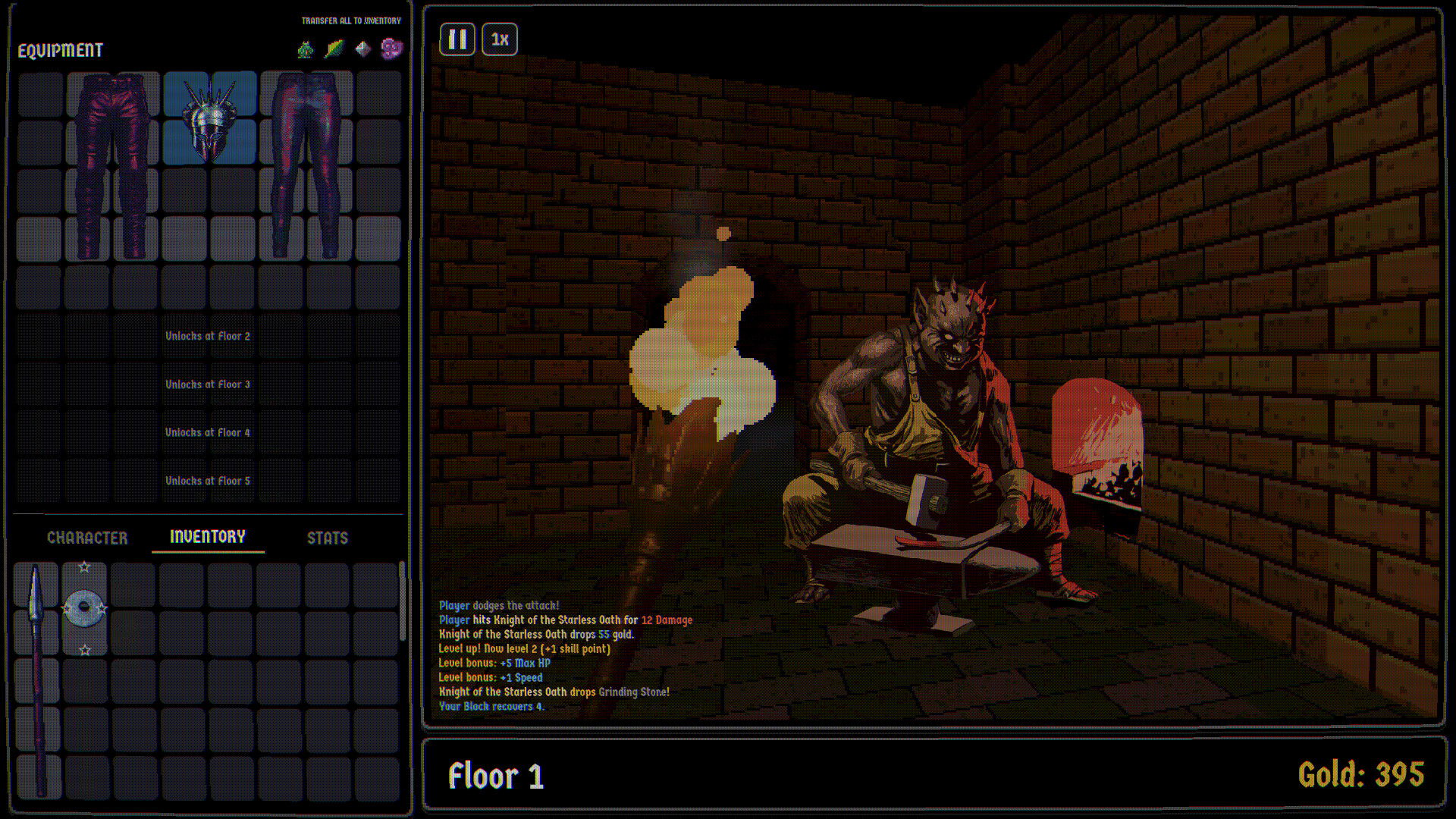
Dungeonbound is a turn-based dungeon crawler that mixes an auto-battler board with incremental progression: your items sit on a grid, one attack sweeps a lap around it, and every run feeds permanent upgrades. Pick the task you are stuck on.
Dungeonbound getting started
- Beginner guide — what to know before your first descent, and where the reference material lives.
- The two modes — incremental versus roguelike, and how each one treats your build.
- Demo and release — what the free demo covers and when the full game ships.
- The playtest — what the closed test was, and what it left behind.
- Patch notes — every version from v0.1.18 to v0.1.51 and what changed.
Heroes
- Character roster — the seven Long Haul heroes and the 32 Climb specialists.
- Unlocking heroes — how a new hero enters your roster.
- Hero passives — the three layers that grant passive abilities.
- Mage subclasses — Lightning, Frost and Fire, and the mana behind them.
Builds
- Mage build — solve the mana problem, then build the Echo Stone loop.
- Rogue build — speed, status hybridization and three layers of defense.
- Monk build — why the weapon slots stay empty.
- Alchemist potions — the one item category that uses ammo.
- Fastest speed build — how to push the attack clock.
Combat and defense
- Speed and turn order — the attack clock, the sweep, and who goes first.
- Backpack layout — arranging the grid so triggers land.
- Weapon slots — how many weapons a hero can carry.
- Grid trigger order — the order triggers resolve inside one attack.
- Block and armor — the two defensive layers and what they each do.
- Dodge chance — the percentage and the curve that flattens.
Status effects
- Status effects list — every effect and how stacks behave.
- Poison build — five changes that make poison work.
- Terror effect — punishing an enemy with its own attack.
Items and forging
- Items list — the categories, the footprints and the rarities.
- Merging items — stacking two identical pieces into one.
- Forge and blacksmith — fusion, the upgrade altar and the smith NPC.
- Gems and runes — socketing gems, placing runes on the grid.
- Item workshop — designing and publishing your own pieces.
Progression
- Permanent upgrades — the five branches and the two currencies.
- Death penalty — what each mode takes from you when you die.
- Daily challenge — one seed, one hero, three modifiers.
Climb and relics
- Relics — what they are, how many there are, what they change.
- Relic drafting — picking one of three offers.
- Shop buys — what to spend gold on, and in what order.
- Ranked climb — hearts, promotion and floor 8.
- Rivals — the snapshots you fight on every floor.
Dungeons and enemies
- Dungeon list — the descents in order and how floors work.
- Bosses — who closes each descent, and why there is no final boss.
- Enemy types — the families on each floor and how difficulty scales.
Multiplayer
- Co-op climb — hosting a lobby, joining a stranger, and the team run.
- Co-op trading — handing items over, and the co-op only items.
Support
- Controller support — what the game accepts, mouse or pad.
- Battle speed setting — why there is no speed slider.
- Crashing on startup — the launch options that fix it.
- Reset progress — resetting one hero or wiping every save.