TANUKI: Pon's Summer delivery route planning tips come down to one rule: match the route to the load. Group your stops by area, start with an address you have already ridden to, and when the bike is heavy stay on the road, brake earlier and take the corner wide.
The stop order is yours to choose on every shift, so a good route is something you build rather than something the game hands you. The trick system is not needed for routine deliveries — if the next address is visible from the road, ride straight to it.
TANUKI: Pon's Summer delivery route planning tips, step by step
- Read the destination list before you load up. Every stop belongs to one of the four towns, and the further out you ride the more the stops change. Knowing which town holds which address is the first half of a good route.
- Group the addresses that sit in the same part of town. A tight loop beats a zig-zag, and grouping also stops you keeping a neighbour waiting while you finish the far side of the island.
- Start with one you have already ridden to. A familiar opening stop settles the bike and gets you oriented with the load on board.
- Ride straight to the next address when you can see it. Advanced tricks are best practised on a light bike in the gap between jobs, and used as shortcuts once you know where they land.
- Save the ramps, rails and rooftops for a light run. They are the fastest way across town when the bike is quick, and the worst way across town when it is not.
When the load is heavy
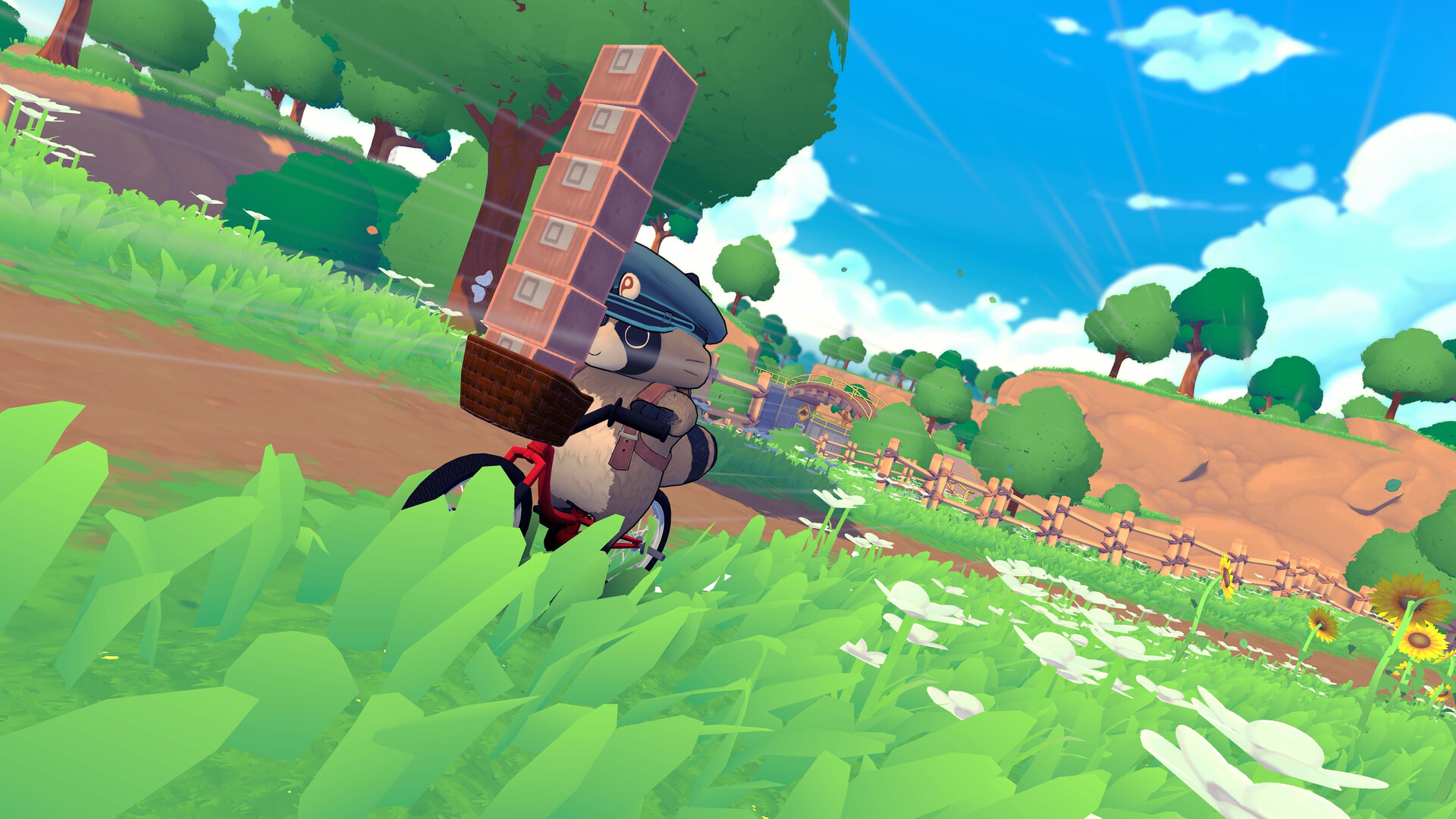
A large or fragile load makes the bike take longer to get moving and carry more momentum into a turn. That changes three things at once: brake earlier than you would on an empty bike, take the corner wide so the load does not drag the rear end round, and leave enough room to land straight whenever you have to leave the ground.
When a job tracks damage, favour the road — fewer jumps, and every landing straight ahead. The trick inputs that are easy to hold under load are the ones worth knowing, because a wheelie or a grind is far more forgiving than a flip. The BMX trick controls page lists every input the developer published, with the wheelie and the grind at the top of the list.
A light delivery leaves Pon free to use more of the bike's speed and airtime. That is when it is worth chasing a shortcut or an extra trick between stops.
Where the coins go
Deliveries are the steadiest of the three income streams, and every coin they pay can go into the shrine. Resident activities pay shrine items that money alone cannot buy, and the BMX challenges are the best filler for the gaps between stops, so a delivery shift is the foundation the rest of the summer is built on.
The same balance pays for the shrine's structure, its decorations and a wardrobe of hats, and only one of those three has a deadline. Put the money into the shrine first; the shrine buy order sets out what that means in order.