At launch the game has two vehicle types: UTVs and an SUV. The revealed UTV line-up is three Kawasaki models plus a Polaris Ranger EV, and an SUV is announced alongside them. The partner brands are Kawasaki, Polaris and Ford.
Hunting Simulator 3 ATVs: the launch line-up
- Kawasaki MulePro FX EPS LE
- Kawasaki MulePro FXT 1000 LeRanch
- Kawasaki Teryx S LE
- Polaris Ranger EV
- Ford SUV — announced alongside the UTVs
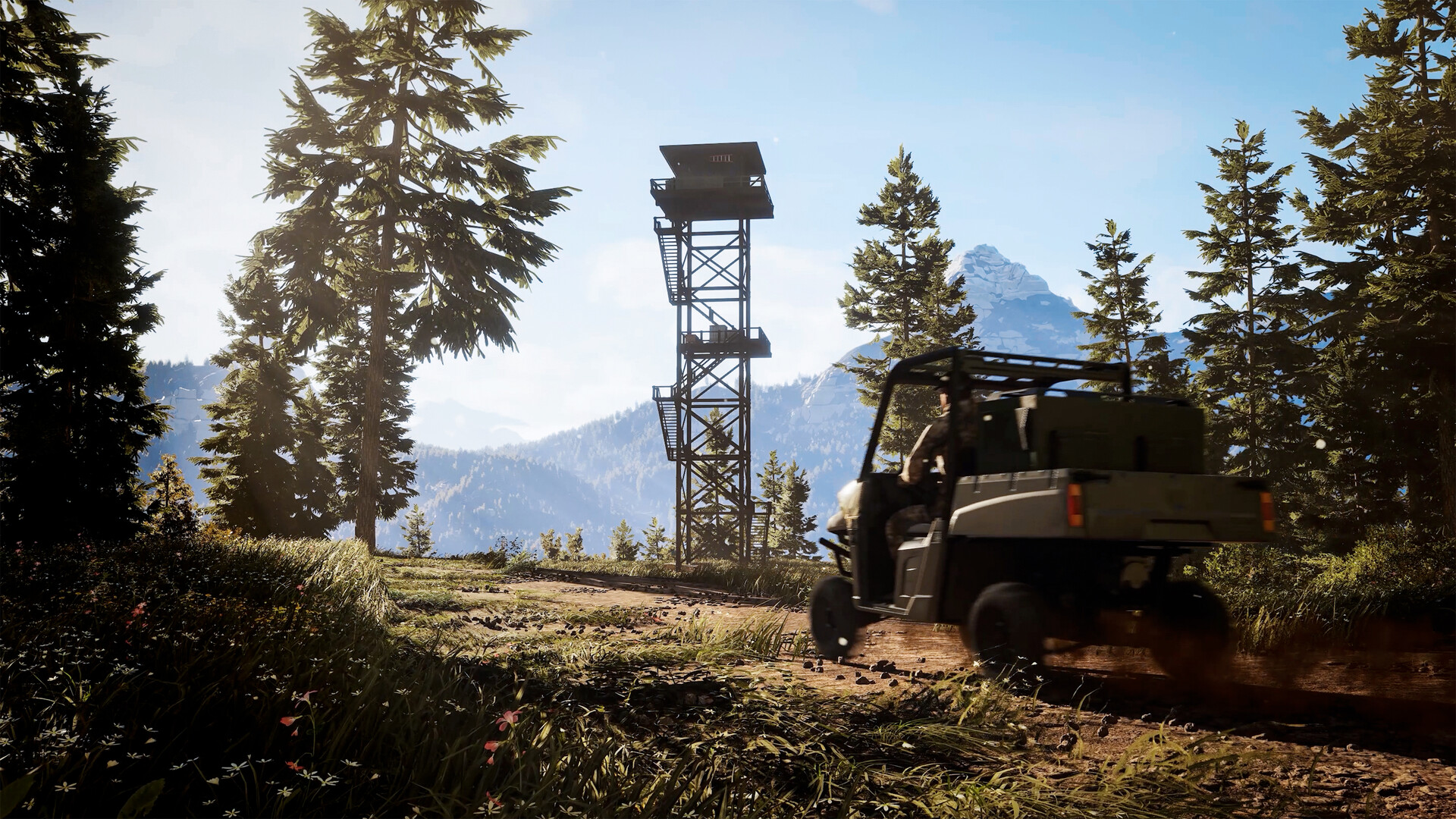
Where you get them
Vehicles are not free. They are bought in the in-game store and collected from the garage, so the money comes out of the same Credits budget as your rifles and clothing.
Two of them are available without buying the full game or the full kit:
- The Polaris Ranger EV also appears in the Apex Predator Pack in an exclusive Pursuit Camo livery.
- The Steam demo includes the Polaris UTV, so you can test driving before you commit to a purchase.
What changed at launch
The launch patch reworked the handling, traction and overall driving physics for all vehicles. The current ride is not the demo's ride, so if you learned a corner in the demo, expect to relearn it in the full game — particularly on loose ground.
Driving is loud: park short and walk
An engine is loud, and sound is one of the three channels animals detect you on. A UTV crosses a 100 km² reserve quickly, which is exactly why it is useful and exactly why it is dangerous: it announces your arrival long before you are in range.
The rule is simple and it does not change by vehicle: park short of the target and cover the last stretch on foot. The stealth guide covers what to do with the last hundred metres.
When a vehicle is worth taking
A vehicle earns its keep when the job is coverage rather than approach:
- Working a need zone on the far side of the reserve.
- Running the loop through a biome to check several zones in one trip.
- Carrying a heavy load of small game back to the lodge.
For anything at close range, the dog is the better tool — it finds signs without announcing you. The find animals guide covers the loop that a vehicle makes much cheaper, and the dog commands guide covers what to do once you are on foot.