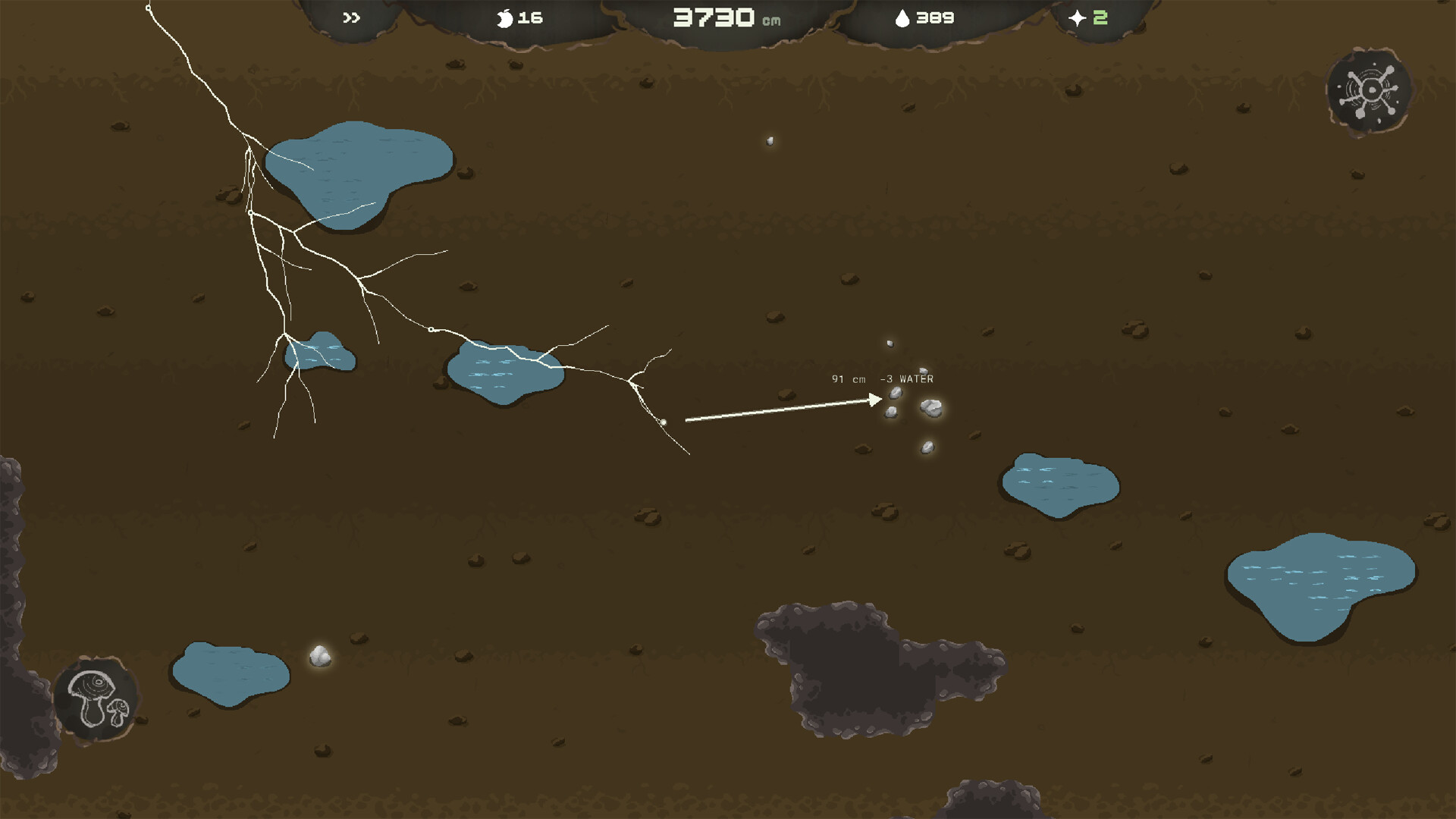
Mycelarium water reservoirs are the blue pools underground that you have to reach to keep the network growing. The water in them is not a building resource — it is the fuel every hypha shot burns, so the reservoirs matter because connecting to them is what keeps you able to shoot at all.
Mycelarium water reservoirs: what you are looking for
The underground is described as an endless procedural space filled with food pockets, water reservoirs, hard soil and impassable stone. The reservoirs show up as blue pools. Reaching one is one of the two named objectives of the first expedition, the other being the food pockets.
There is no separate "water collection" step. You grow into a reservoir and the water you need is in the pool, and from then on every shot draws on it.
What a shot costs you
Every hypha shot has a water price, and the aiming preview shows it before you commit: one shot read "91 cm" and "-3 WATER". Longer shots cost more. The Water Efficiency node in the upgrade tree reduces that cost for every shot you take afterwards, which is why it is worth taking early even though it does nothing visible.
Water is never the resource that runs out. Food is. Players report consistently that water is never a problem, and the game's own on-screen tip points the other way when it rains — during the rain, hyphae shots do not cost any water at all. What changes at night is in the rain bonus.
When a gap is too wide to shoot across
Water efficiency widens what a single shot can cover, but there are gaps no shot will close, and impassable stone is one of them. The answer there is not a longer shot: it is to launch a wind-carried spore into the empty space and let it seed a new growth point on the far side. That is covered in wind carried spores.