Housing in Wall World Strategy comes down to two numbers: how many people you have and how many slots your housing provides, and the colony punishes the gap between them with an event rather than with a slow stat. This Wall World Strategy housing and overpopulation guide covers the two housing types, the capacity counter and where the overcrowding threshold sits.
The Wall World Strategy housing and overpopulation guide, step by step
- Read the top bar. Population is tracked there against a capacity figure, in the form of 62 out of 85. Compare the two before you build anything else.
- Add Barracks while you are small. One Barracks holds a small number of slots, and early on you want slots for the people you already have.
- Watch the ratio, not the count. One run that overbuilt Barracks by roughly 10 slots got an overcrowding event, so a capacity figure sitting well above your population is not the safety margin it looks like.
- Consider the Modular House before you need it. Four Barracks can be replaced by a single Modular House — but the resources you spent on those Barracks are lost outright when you make the swap.
- Assign labor by hand. The workforce splits into Miners, Engineers and Workers, and you assign them to each building yourself from the building's Labor Force panel.
- Put beds ahead of anything else in the opening days. People without a home fall ill more often, and treating them in the infirmary consumes a lot of time and engineer hours.
Beds first, then mood
Housing is not optional in the opening days even though it is expensive. The reason is that the cost of not having it lands somewhere else: unhoused people get sick more often, sick people occupy infirmary beds, and treating them burns engineer hours that you needed for generators and turrets.
So the early priority is beds for the people you already have, not capacity for future residents. Once that is sorted, the next thing that moves the colony's mood is a different problem entirely. The morale and food supply guide covers what the bar at the bottom of the screen is actually measuring.
Overcrowding is an event, not a stat
Overpopulation is enforced through the event system. A player who overbuilt Barracks by roughly 10 slots got an overcrowding event complaining that there was not enough space, rather than a slow efficiency penalty that would have given them time to react.
The official framing is blunter: overpopulation, food shortages or supply disruptions can quickly lead to declining efficiency, crisis and riots, and the state of your population determines the performance of the entire colony. A strong and well-supported society recovers faster from attacks.
Because the trigger is an event, the cause is a build order rather than bad luck. The random events and emergencies guide covers which events your own decisions set off.
Barracks and the Modular House
There are two housing buildings.
- Barracks. The option you add in small increments, each one holding a small number of slots.
- Modular House. Replaces four Barracks with a single building, which is the compact option once you are past the opening.
The cost of the swap is the part to think about. Replacing them means the resources spent on the Barracks are lost outright, so the Modular House is a purchase you make once you know how many people you are keeping, not a cheap upgrade. A reported bug also allowed a Modular House to be built on top of Barracks without the Barracks being removed, so double-check the colony if your housing looks like more than you paid for.
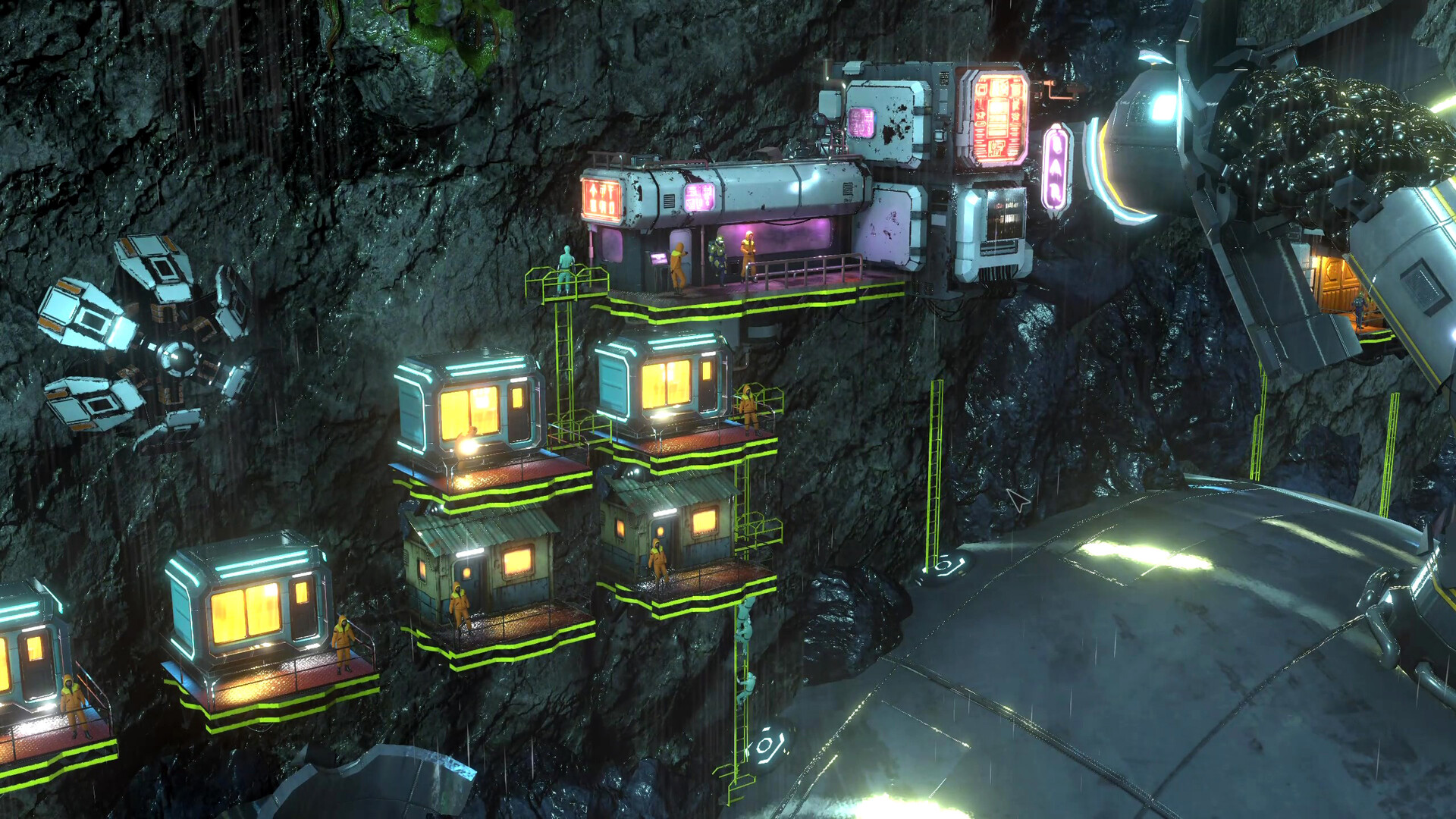
Reading capacity and assigning labor
Two numbers sit next to each other in the top bar: how many people the colony has and how many it can house. Keeping them close is the whole job. The workforce underneath them splits into Miners, Engineers and Workers, and each building's Labor Force panel is where you decide who works where — by hand, one slot at a time.