Carry On Together how to carry heavy furniture with the left or right mouse button: with empty hands the on-screen prompt reads Grab & Carry, and the piece stays a physical object in your hands instead of turning into a carried icon.
Carry On Together how to carry heavy furniture: the grab and carry binding
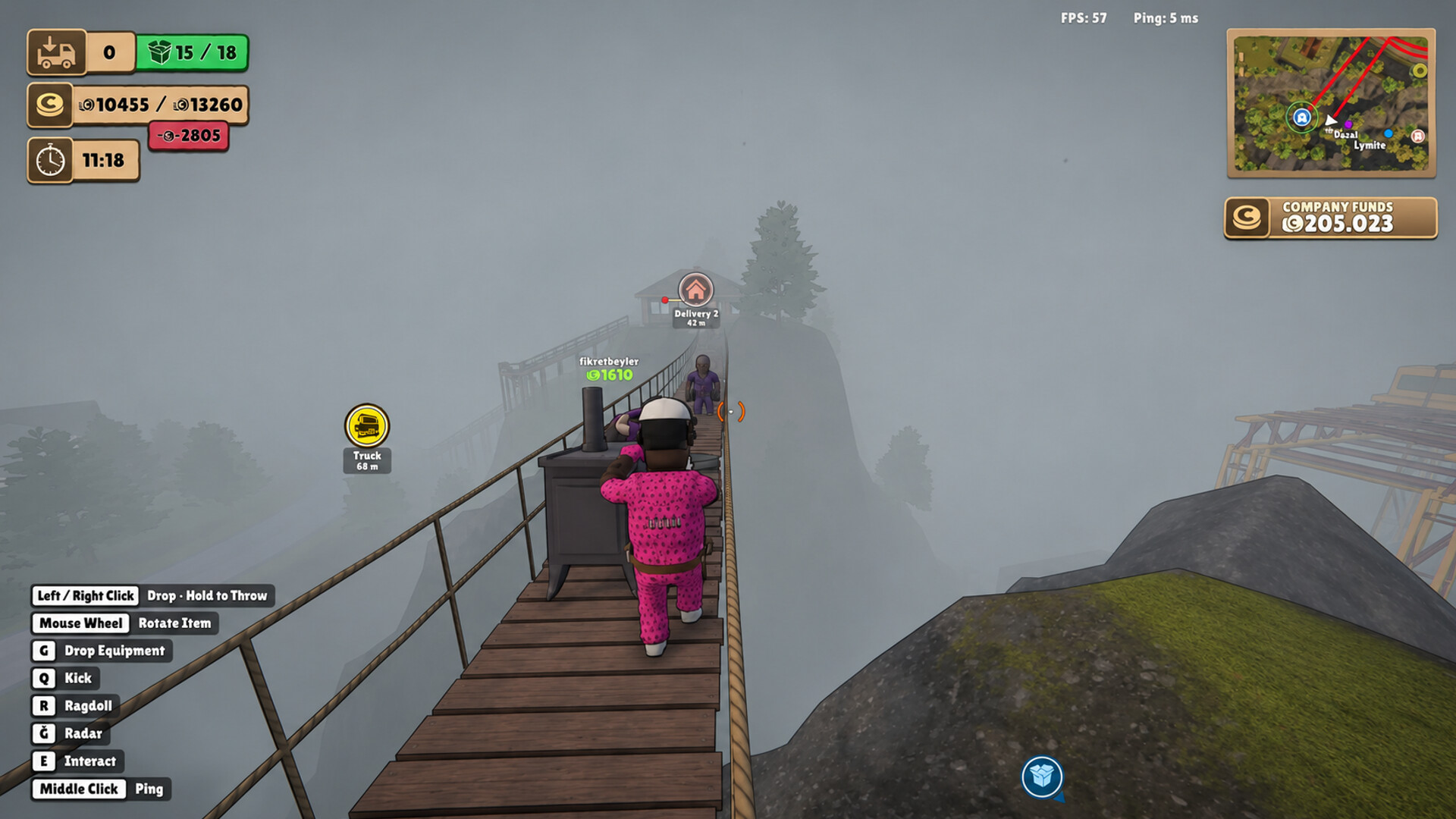
Left / Right Click is the one binding you use for every piece you pick up. The on-screen control list tells you which mode you are in: with empty hands it reads Grab & Carry, and the moment you are holding something the same two buttons read Drop - Hold to Throw.
That second label matters more than it looks. Releasing the button lets go of the piece, but holding it down throws it, with all the momentum the physics gives it. When a piece is wedged somewhere and you cannot get a clean release, throwing it across the room is a legitimate way to clear the spot.
A carried piece never becomes an icon on your back. It stays a real object with weight and shape, which is why a refrigerator behaves like a refrigerator and not like a stack of paperwork. Bulky pieces have to be turned and angled in doorways and stairwells instead of being carried through them sideways.
What the job sheet tells you before you lift
The job sheet prints a crew icon next to every item, so you know what a piece needs before anybody grabs it. Two people are needed for a Brown Piano or an L-Shaped Sofa, while a Refrigerator and a Washing Machine carry a two-hands icon. The legend along the bottom of the sheet counts the whole job by crew size: 1 hand, 2 hands, 2 people and 3 people.
Couches, fridges, pianos and giant boxes are the pieces that always force a team lift. Reading the icons takes a second and saves the twenty seconds you would spend watching a sofa drop in a hallway. The job sheet guide breaks down every field on that page, including the value and weight printed next to each piece.
Single-player pieces and team lifts
Some furniture is simply too big to carry alone, and a run goes better when the crew splits the load: one player takes the heavy pieces, another takes the small ones, and someone keeps the truck open. When a piece needs two people, grab it together and lift together, because a solo attempt at a piano ends with the piano on the stairs. The two-player carry guide covers the timing, the turning and what to do when a grip breaks.