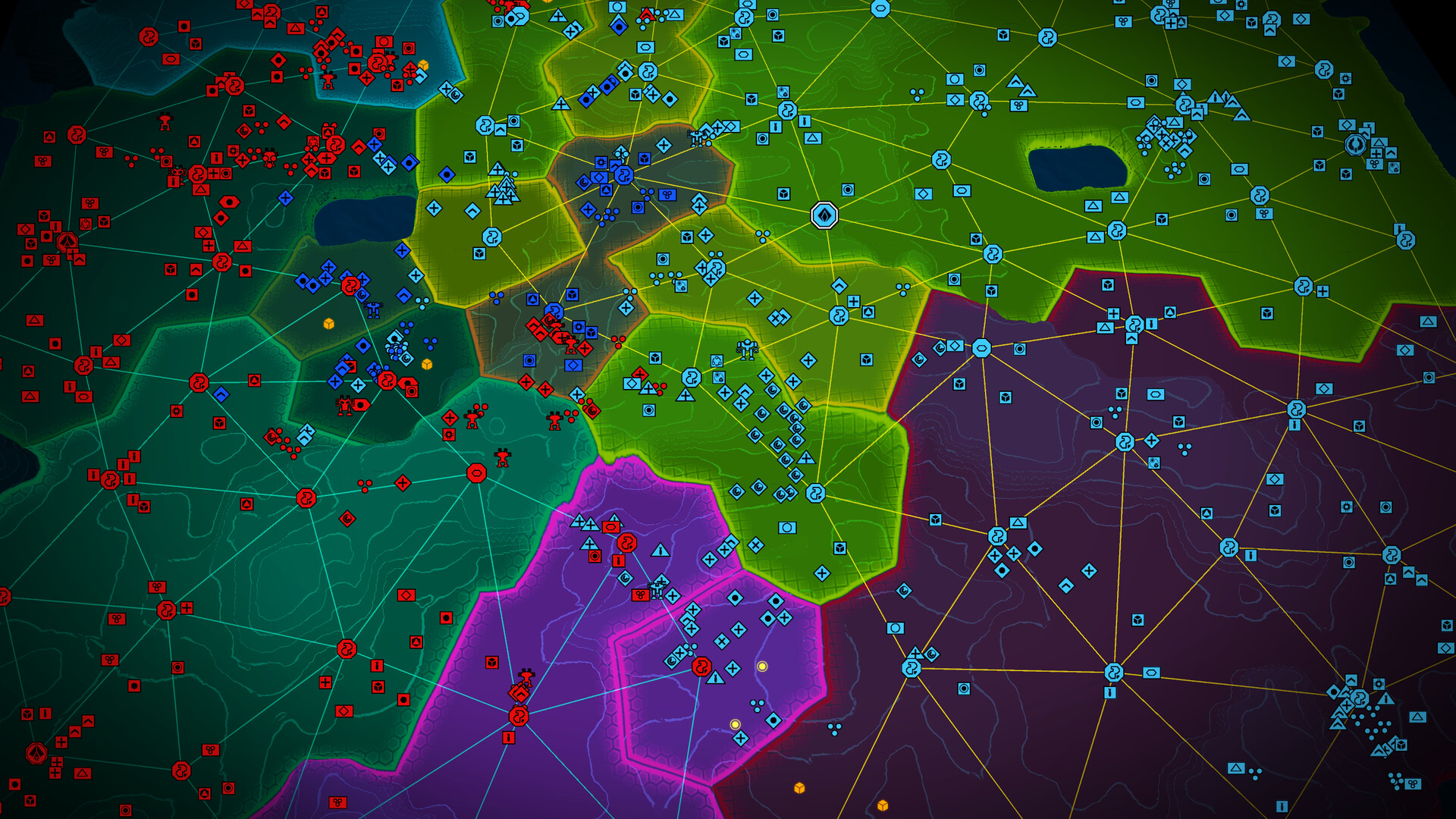
Ashes of the Singularity II territory control works by connection lines: your regions are linked back to your home region, and any region that gets cut off loses power, stops producing resources and stops running production buildings.
How Ashes of the Singularity II Territory Control Works
Regions are the territorial unit of the map, and holding them is how you win. Each region connects back to your home region through a chain of connection lines, and if a region becomes orphaned or isolated it loses power.
An unpowered region is not a contested region, it is a dead one. It cannot generate resources and it cannot use its production buildings, which means a flanking enemy can neutralise an outpost without ever fighting for it. That is the core of the territory game in Ashes II: the map is broken into regions with power lines rather than the plain regions of the first game, and every region you hold is only as useful as the connection behind it.
Region Power Is Your Build Budget
Region Power is the new build limit that replaced the first game's Region Slot system. Every building has a unique power cost, and a region's power budget caps how much you can build in it.
The practical change is that a region is no longer a single building slot. Many buildings can now be constructed in a single region, limited only by the power in that region. A region that generates more power lets you stack more production and structures on top of it, which is why where you build is now a strategic decision rather than a spacing exercise.
Where Power Comes From
Different regions generate different amounts of power, so your backline and your frontline are not interchangeable. The strategic question is whether to play it safe and upgrade your backline regions for economy, or upgrade your frontline regions for pressure.
Because power also decides how many production buildings you can stack, the answer compounds. A well-powered frontline region can hold more production and support structures than a poorly-powered one, which is what makes capturing a strong forward region worth a fight.
Cutting Power With Flanking
You have two ways to stop a hostile army reinforcing its front. You can assault the key region directly, or you can outmaneuver it and capture the connecting regions to de-power its production buildings.
On a large map this is worth a lot. De-powering a region can delay an opponent's reinforcements by several minutes, and several minutes of missing reinforcements is often enough time to outproduce them outright. It also makes skirmishing and raiding viable tactics: buying time with a small army is a force multiplier for your main army elsewhere.
That is also why forward production carries risk, since the same rule works against you. The base layout and forward production guide covers what it takes to build production forward and how an enemy can punish it.
One limit is worth knowing: right now most regions are broadly similar, so territory mostly functions as a way to gain more resources, and the early game is often two players clearing neutral ground until their borders meet. Regions with unique advantages, such as better radar coverage, special resources, cheaper building, double supply or neutral defenders that stay as limited allies after capture, have been asked for but are not in the game.