Pick the system you need a straight answer on. Each page below covers one question about playing Ashes of the Singularity II.
Ashes of the Singularity II basics
- First match tips — what to do in your first game, what the demo covered, and where the real reference material lives.
Factions and unit rosters
- The three factions — who the UEF, PHC and Substrate are, what they fight over and how their rosters differ.
- United Earth Forces — the human faction built on mass, infantry and durability.
- Post-Human Coalition — smaller, costlier armies built around armour and repair.
- AI Substrate — machine intelligence with regenerating shields and drone swarms.
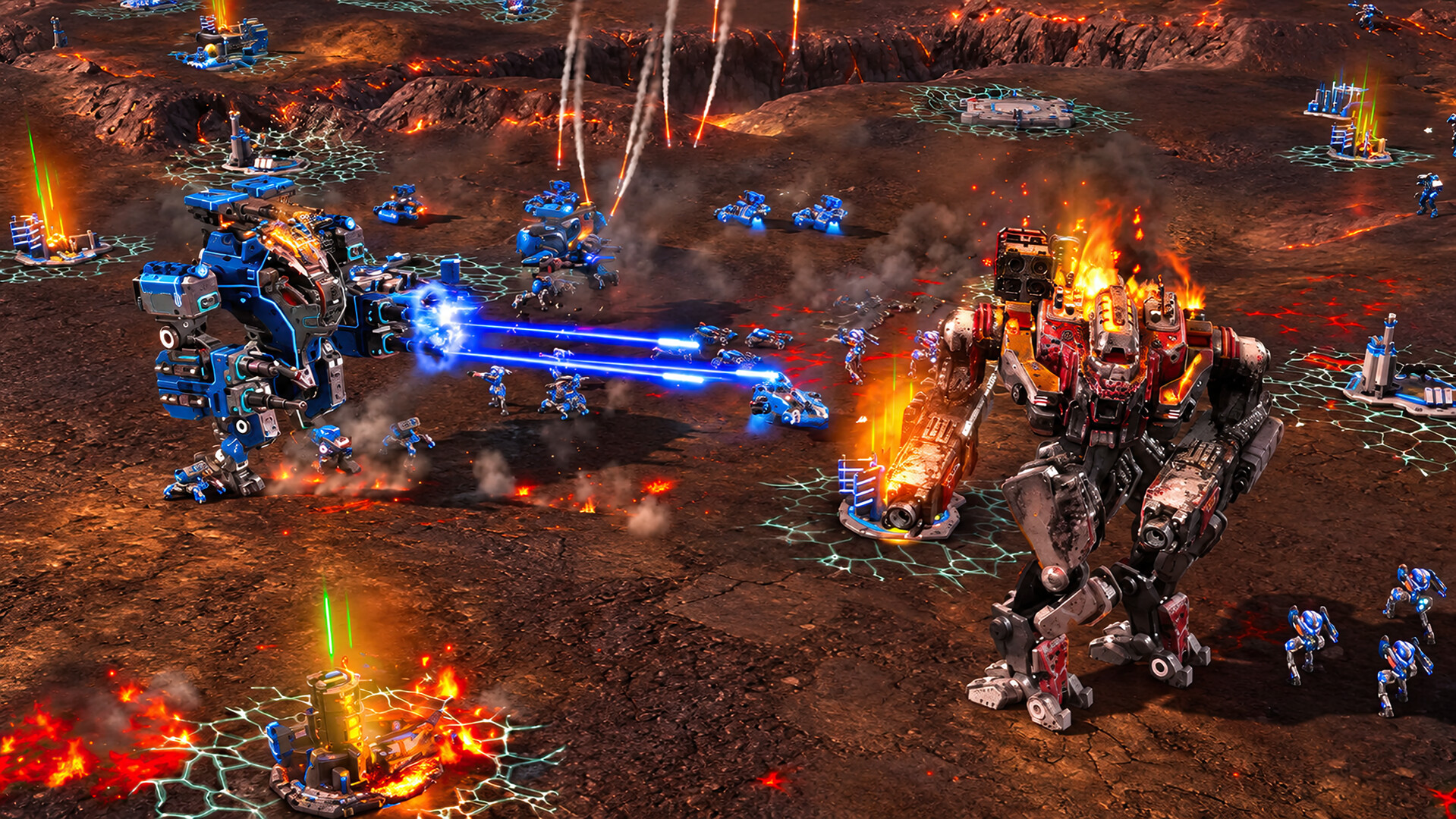
- Mechs and unit upgrades — torso twisting, independent arm weapons and per-unit upgrades.
- Orbitals — active abilities, friendly fire and the new ones in this game.
Economy and territory
- Territory control and region power — connection lines, power budgets and how to cut an enemy off.
- Region resources and Turinium Victory — streaming income, Elerite, Turinium and the win condition.
- Base layout and forward production — ordering regions instead of buildings, and leapfrogging your output.
- Production queue and hotkeys — reading the queue, prioritising orders and recruiting by key.
Armies and combat
- Armies — composition, formation and how a mixed army arrives as one.
- Pathfinding — the navigation graph, A* and where traffic jams.
- Defense turrets and HQ upgrades — firing arcs, high ground and the endgame HQ turrets.
- Unit counters — how to beat a bigger army, and how armour actually works.
- Artillery and fighter jets — area denial, and why the answer to artillery spam is air power.
- Chokepoints and high ground — attacking a pass, breaking a defended one, and what elevation buys.
Modes and opponents
- AI difficulty and cheats — the seven tiers, the economy rules and the Rush, Boom and Turtle profiles.
- The campaign — 10 missions, 8 to 12 hours, Act 1 of a three act story.
- Single player modes — campaign, skirmish and what offline play supports.
- Multiplayer — the eight player cap, lobbies, co-op, co-op saves and observer mode.
Maps, mods and setup
- Maps and map generation — procedural single biome worlds, heightmap seeds and the map editor.
- Mods and Steam Workshop — what the data and scripting tools can change, and when they arrive.
- Hotkeys and interface — building rows, army keys, the camera and fog of war.
- System requirements and Steam Deck — the specs, what drives your frame rate and controller support.