Carry On Together how to load the truck by pressing E at the tailgate to slide each piece in, then holding E if the load does not fit so the tailgate is forced shut.
Carry On Together how to load the truck: the loading steps
- Carry the piece to the tailgate of the truck. Line it up with the bed rather than dropping it at an angle, because the load stacks as physical objects.
- Press E to slide the item in. The furniture stays a physical stack in the truck bed, so where it lands is where it will sit.
- If the pieces do not fit, hold E to force the tailgate shut. Do this before you drive, not after.
- Check the truck panel on the HUD. The truck icon counts the pieces physically on the truck, and the green crate counter tracks how far through the job's list of items you are.
- Check the job list itself for anything still missing, so you do not drive to the drop with a piece still sitting in the house.
- Confirm the tailgate is shut and the load is settled, then set off.
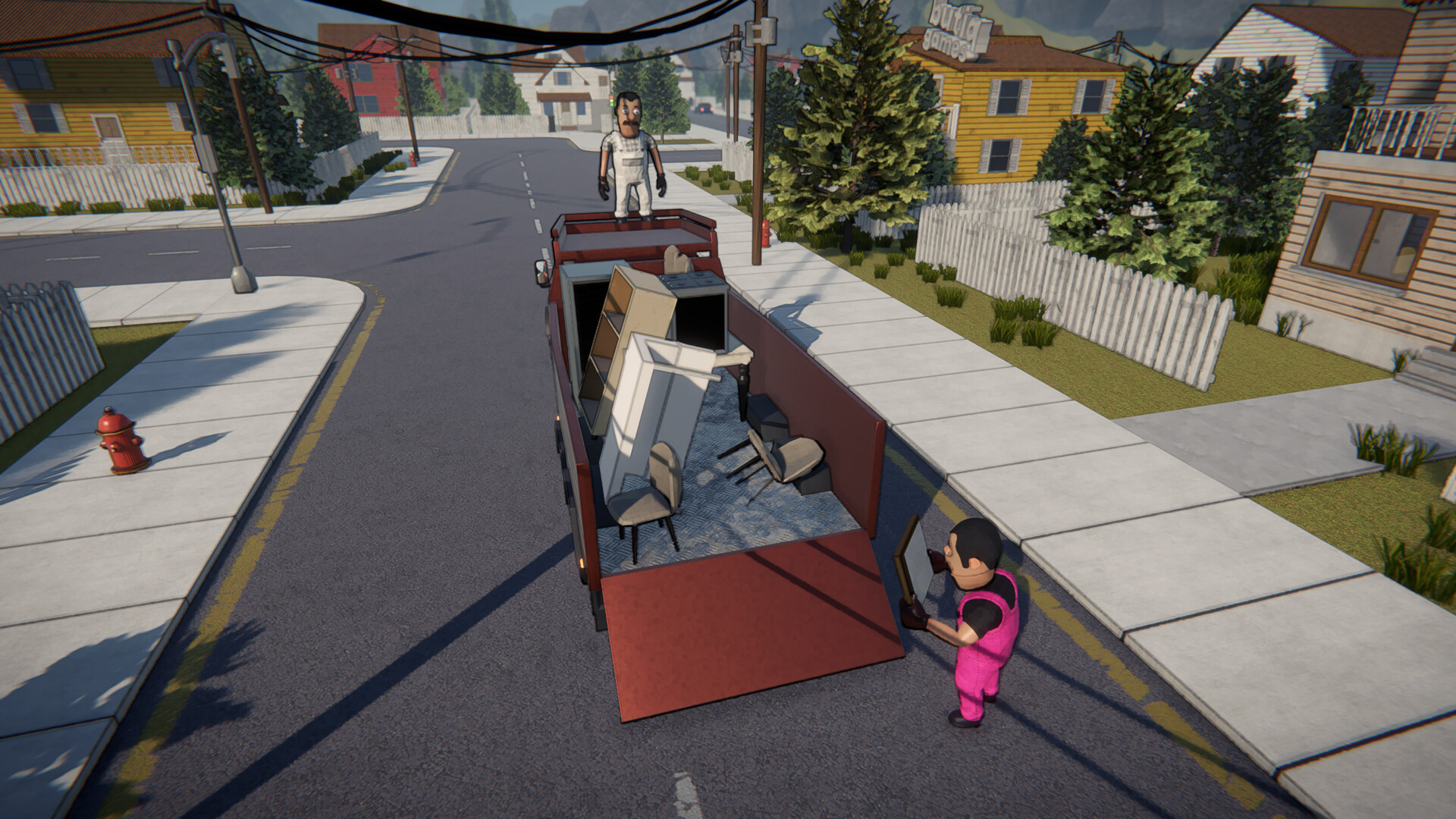
Unloading is the same operation
Unloading is the same E interaction at the other end. The task sheet tracks what is still missing, a delivered piece gets a green tick and its name struck through, and a destroyed piece gets a red cross, the label Scrap and a value of ¢0. A piece that arrives broken still fills a slot on the sheet, so the sheet alone cannot tell you whether the job went well — the money line can.
The HUD names the Unloading Area with its distance in metres, and the minimap draws the route to the next drop, so you can drive to the marker rather than guessing the street. What the delivered pieces are worth, and how much damage comes off the invoice, is on the making money guide.
Do not set off with the tailgate open
Leaving the tailgate open is the single easiest way to lose a load. Earlier demo builds could fling the whole truck when the rear door was opened, and loads have come loose on slopes when the driver climbed in or out. That kind of loss is billed straight back to the contract, so the last check before you pull away is the tailgate.
If the load still shifts once you are rolling, that is a driving problem — cargo flying out covers what makes a stack come apart on the road.