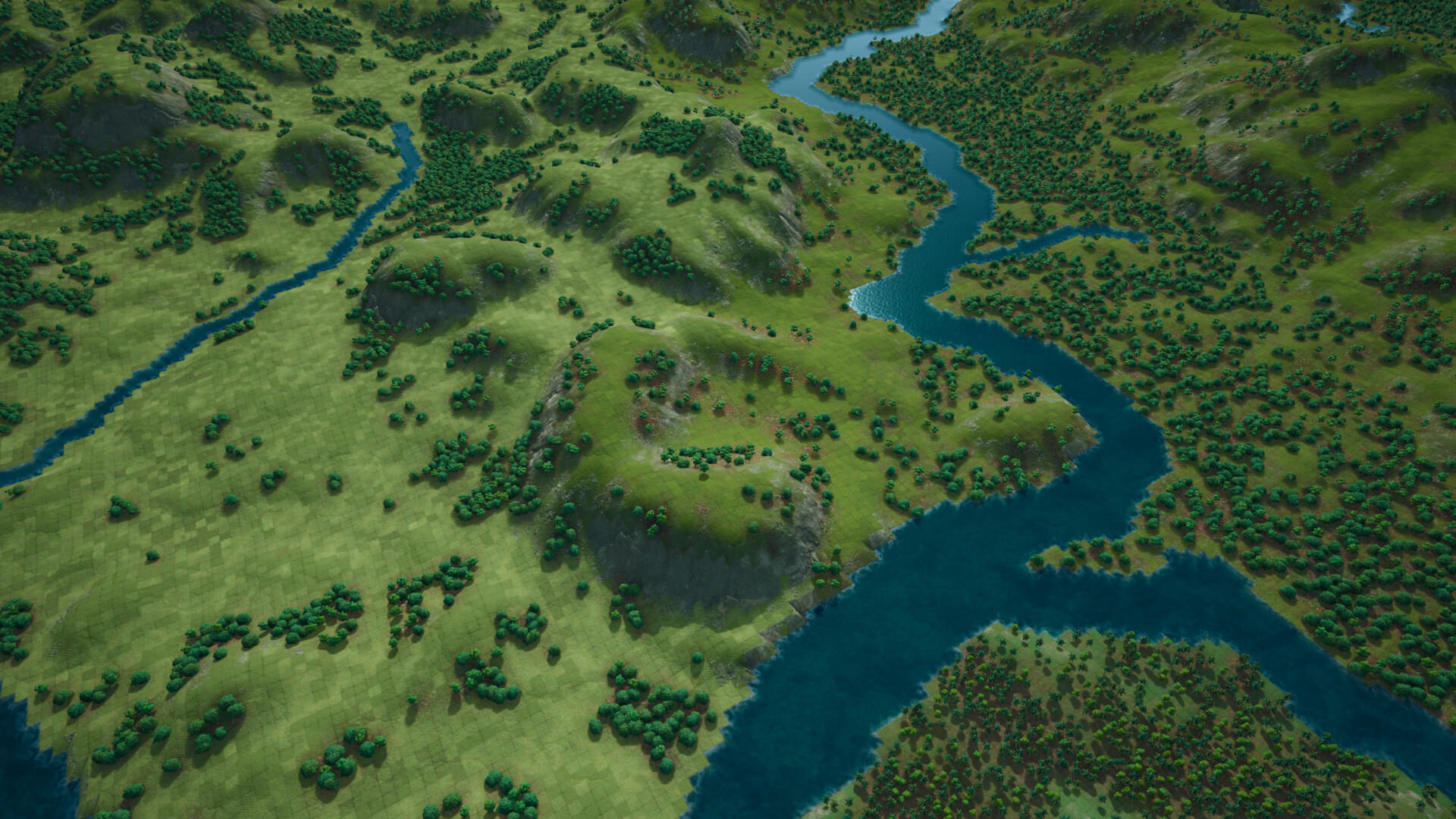
County of Fortune is a medieval county-builder where you found whole settlements on a grid, grow them from hamlet to city, and wire the county together with roads, rivers and trade. Everything below is grouped by the job you are trying to do.
Start your county
- Your first settlement — pick a starting industry, place the settlement, and read the two tabs that drive everything.
- Where to build settlements — the site rules that decide what a settlement can produce.
- Moving a settlement — relocate a village you founded in the wrong spot.
- Deleting a settlement — what you can remove when you want a village gone.
Grow your settlements
- Levelling up — fill the needs counter and take a settlement from hamlet to city.
- Building slots — unlock slots with chests and tunics.
- Higher tier buildings — markets, taverns, docks and ports.
- Population — where new villagers come from, and why a full settlement can be empty.
Connect the county
- Building roads — connect two centre squares the first time.
- Upgrading roads — turn dirt into stone with a masons' guild.
- Building bridges — wooden or stone, and why the order matters.
- Distributing products — why goods arrive late, or not at all.
Trade between regions
- Trading — trade runs between regions, and only over roads or rivers.
- Trade routes — set up a route and let it auto-trade.
- Raft ports — the only way to move heavy goods.
Make things
- Production chains — logs to carpentry points, stone to masonry, wool to tunics.
- Changing production — replace a building without losing its resources.
- Construction points — free points, carpentry points and masonry points.
- Building maintenance — stop breakdowns before your settlement empties.
People and power in County of Fortune
- Choosing a mayor — pick the bonus your county can actually use.
- Noble houses — power shares, elections, privileges and the Assembly.
- Cultures — how cultures spread and what they change.
- Traditional products — six slots per culture and the synergies between them.